Oracle Integration Cloud
Integrate applications with Oracle Integration Cloud
Discover various options to integrate applications and how to do it step by step with Oracle Integration Cloud.
Discover how application integration with Oracle Integration Cloud eliminates silos, automates processes, and connects cloud and on-premise systems.
Have you implemented a new application that must coexist with the rest of your technological ecosystem?
Do you need data from heterogeneous environments in your corporate ERP?
Has your organisation grown through acquisitions, and has application integration become a bottleneck?
Digitisation, mergers, deployment of new cloud solutions, and replacement of legacy systems are common situations in today's businesses. In all these scenarios, application integration becomes a critical factor in ensuring operational continuity, data consistency, and business process efficiency.
In addition, many organisations continue to rely on poorly governed routine processes based on emails, Excel spreadsheets or ad hoc developments, which increases operational risk and hinders scalability.
In this article, we explain how Oracle Integration Cloud (OIC) enables you to address both enterprise application integration and process automation in a simple, agile, and scalable way.
%20-%20BLOG%20-%20Unikal%20-%20DIG.png?width=600&height=338&name=IMG%20RRSS%20(ING)%20-%20BLOG%20-%20Unikal%20-%20DIG.png)
If you have come across this blog, you are probably familiar with the situation in which you are responsible for or have participated in the process of integrating a new application with other existing applications for reasons such as:
New deployment (of a new application), which must coexist and interact with the rest of the ecosystem in the most transparent way possible.
Acquisition or merger of companies with different ecosystems, which requires a migration process to a single system in order to consolidate the company's core information, usually an ERP, although environments such as CRM, HCM, etc. are also common.
Replacement (of a legacy application), again causing the new system to interact with other existing environments.
Oracle Integration Cloud (OIC) is Oracle's iPaaS (Integration Platform as a Service) platform, recognised as a leader in Gartner's Magic Quadrant, designed to act as an application integration hub in cloud, hybrid, and on-premise environments.
Its objective is to centralise, govern, and simplify the integration of applications and processes within an organisation's technological ecosystem, providing a secure, scalable orchestration layer aligned with real business needs.
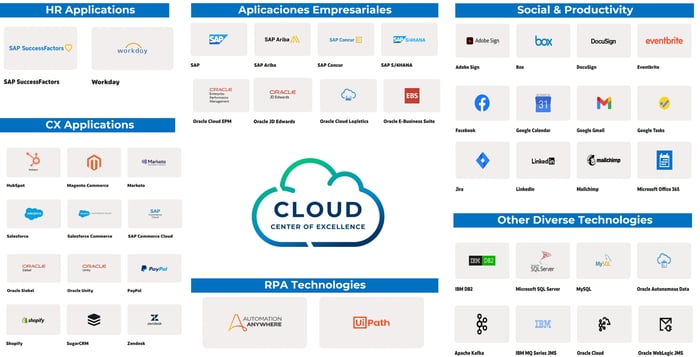
This blog is not intended to provide a technical description of OIC's capabilities. Rather, the idea is for you to understand which use cases can be easily solved using this PaaS (Platform as a Service) service.
This first use case revolves around a common problem in many companies, especially those involved in manufacturing equipment, food, pharmaceuticals, agriculture, etc.
The issue is that the process of registering an item in your ERP is not a simple one, as it usually involves a series of intermediate steps, such as approvals, verification of tests carried out, certificates of conformity, etc.
All of this involves a process that can take quite some time and, in many cases, is not fully automated, slowing down especially in manual operations, such as requesting the review of documentation by email and waiting for a response.
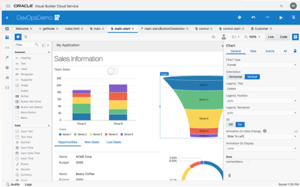 Visual Builder: Allows you to create interfaces for users to interact with the process without scattered emails or documents, structuring information from the source.
Process Automation: Facilitates the visual design (drag & drop) of approval, validation, and exception management flows. Clearly defines each phase of the process, those responsible, information inputs and outputs, and manages iterations and rejections with automatic notifications and full traceability.
Integration: Once the flow is complete, OIC automatically integrates the new item into the ERP using standard or custom connectors, ensuring consistent and governed data loading without manual intervention.
In scenarios involving mergers, acquisitions, or the replacement of legacy systems, it is common for two ERP systems to coexist during a transitional period.
The challenge: ensuring a single, consistent master data set without disrupting daily operations.
 How OIC assists
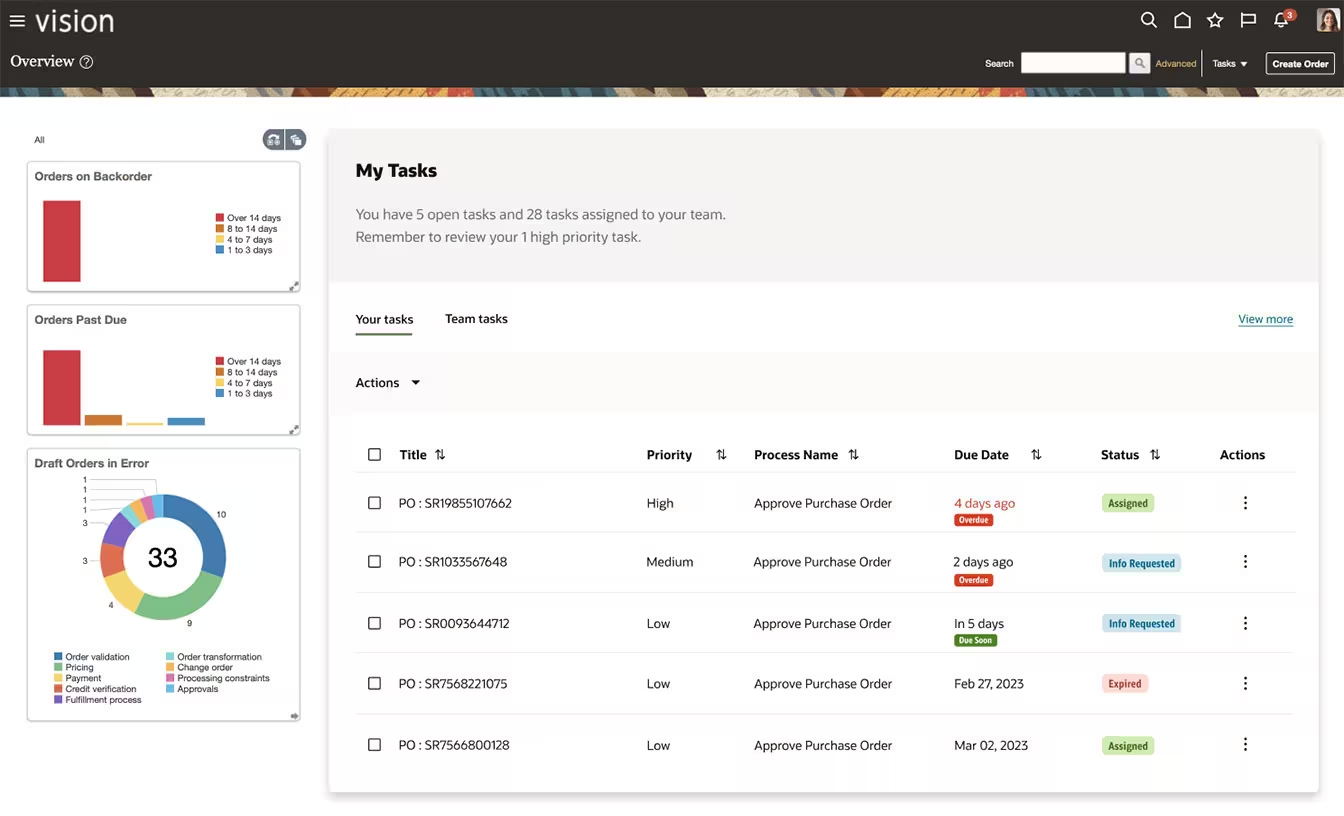 Process Automation (optional): As a complement, workflows can be implemented for error management, approvals, or exceptions. These workflows enrich the integration process, adding control, traceability, and governance when the situation requires it.
In this scenario, Oracle Integration Cloud acts as a governed cloud ETL (Extract, Transform & Load), but incorporates advanced process automation and user experience capabilities, making it a much more comprehensive solution than a traditional integration tool.
Application integration is a strategic enabler for scaling the business, accelerating digitisation, improving the user experience, and ensuring data governance and quality. iPaaS platforms such as Oracle Integration Cloud enable you to evolve from one-off integrations to a sustainable and scalable model.
| Without iPaaS | With iPaaS (OIC) |
|---|---|
| Manual and inefficient processes | Automated and traceable processes |
| Information silos | Integrated ecosystem |
| Inconsistent data | Single master data |
| Ad hoc integrations | Reusable and governed flows |
| Low visibility | Centralised monitoring and analytics |
| Security risks | Native encryption and control |
Oracle Integration Cloud allows you to approach enterprise application integration from a modern, scalable perspective that is aligned with the current needs of organisations.
Centralising integrations, automating processes, and offering a consistent user experience are key steps to moving forward with digital transformation with confidence.
At Unikal Tech Partners, through our specialised partner Neteris, we have extensive experience in helping companies design, implement, and evolve their integration strategies with Oracle Integration Cloud.
Discover various options to integrate applications and how to do it step by step with Oracle Integration Cloud.
Automating business processes with Oracle Integration Cloud (OIC) solution eliminates bottlenecks, connects systems and scales your business
Discover the benefits of migrating to OIC Gen3: more security, RPA, AI and key improvements in integration and development